
My PWR Portfolio
Holocaust Articles
2025


2024


2022




Context:
Each year during Holocaust remembrance, Elon University hosts a Holocaust survivor to share their story of survival and resilience. Funding is made possible from general sponsors, including the Abell family, credited with starting Elon’s Jewish Studies study away program.
Rhetorical Strategies:
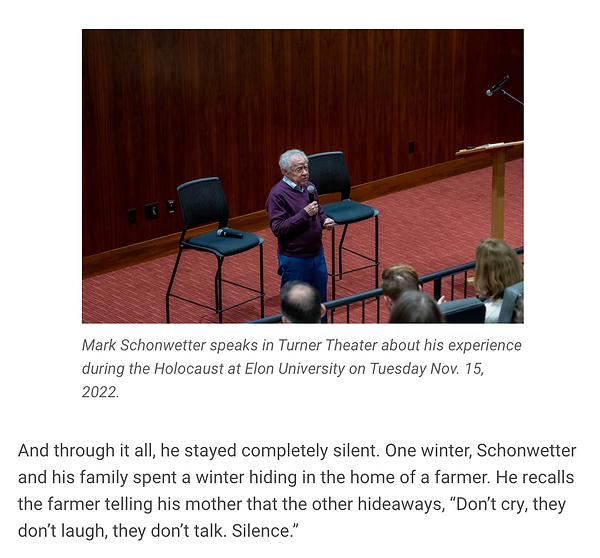
With stories like this, the most important thing to do before writing is listening to every single word and question asked and answered throughout the presentation. I would read the transcription in its entirety, noting quotes and portions of the survivors story I felt were the most pivotal to highlight. One component that I felt resonated greatly in these stories was emphasizing the fact that these survivors were even younger than most Elon students at the time of the hardships they faced in the Holocaust. This is a prime example of a strategic use of pathos in the appeal to fear for the audience. It sets in the reality of the dangers of the situations that these survivors were placed in against their will. Reiterating the parts of their story that discuss the ways in which their youth was unfairly stripped from them is a powerful rhetorical tool I implemented to connect the audience with each survivor's unique story. Additionally, elements of visual rhetoric were embedded within the Today at Elon website throughout each article, showcasing each survivor deep in discussion to the Elon community. This situates Elon as an institution that cares deeply about educating their students on important history through unique opportunities that engage us with once-in-a-lifetime guest speakers.
Reflection:
Writing these stories annually has been one of the highlights for me working at the Office of University Communications. Each survivor has had different, unique, tragic and resilient words to share with the Elon community, and I feel honored that I have the privilege as a student journalist to attend and spread word about these events. What strikes me the most in joining these presentations (and gives me the most hope for the future), is when the students ask thought provoking questions towards the end of the session, that always results in productive conversation, community, and most importantly, humanity, between each guest in the room. Additionally, I began to get the hang of the sequence this article is structured in annually, as I covered it during my freshman, sophomore and junior year at Elon. There is clear progression in the quotes chosen, trending upwards in impact throughout each year.